World War III in 1985 – A Harpoon3 Battleset Diary
by Guest Writer Mark “Boxer” Doran
Previous Episodes:
- Introduction: WW III in 1985 – A Harpoon3 Battleset Diary
- Episode One: First Contact
- Episode Two: Fighting Withdrawal
|
Barents Sea, Part 1 – |
Date/Time: 14 September 1985 / 01:00:00 Size/Duration: + |
| Location: Barents Sea Playable sides: NATO |
|
| Type: ASuW | |
| Briefing: Soviet SSBNs, also known as Boomers, normally operate within highly protected bastions in the northern home waters. This protective measure is necessary because unlike US Ohio SSBNs, which patrol alone relying on quietness for protection, Soviet submarines are more easily tracked and destroyed by NATO attack submarines. Currently about 12 older Delta SSBNs are operating in the Barents Sea, with Typhoon and Delta IV SSBNs patrolling the eastern White Sea and east of the island of Novaya Zemlya. The rest of the SSBNs remain in port on the Kola Peninsula, ready to fire their missiles. |
Scenario Briefing
NATO vs Soviet Union
Location: Barents Sea
Date/Time: 14 September 1985, 01:00:00
Soviet SSBNs, also known as Boomers, normally operate within highly protected bastions in the northern home waters. This protective measure is necessary because unlike US Ohio SSBNs, which patrol alone relying on quietness for protection, Soviet submarines are more easily tracked and destroyed by NATO attack submarines. Currently about 12 older Delta SSBNs are operating in the Barents Sea, with Typhoon and Delta IV SSBNs patrolling the eastern White Sea and east of the island of Novaya Zemlya. The rest of the SSBNs remain in port on the Kola Peninsula, ready to fire their missiles.
At war outbreak four NATO attack submarines were operating in the Barents Sea, in and around the Soviet SSBN Bastions.
Orders for CMDR NATO Forces
Intel:
The Soviet Boomer Bastions are perhaps the most ASW-intensive areas in the world. Threats include Soviet SOSUS networks, moored sonobuoys, surface and sub-surface ASW barriers, ASW aircraft and all types of mines.
Mission:
Get underway immediately. Penetrate the Bastion and destroy Soviet boomers. The SSBN operating area is marked by Ref Points 1-4. A minimum of six (6) enemy SSBNs must be sunk. Not more than two (2) of your own submarines must be destroyed.
It is hoped this move will force the Soviets to increase their defense of the Bastion, drawing forces away from the front. Sinking these SSBNs will also reduce the Soviets’ essential offensive nuclear strike capabilities.
Command and Signal:
Headquarters – Keflavik
Recommended EMCOM State – B (Limited Emissions)
After Action Report
01:00Z
Keflavik NAS
The duty officer stares in disbelief at the orders from COMSUBLANT. It’s been completely apparent from the reports coming in from the Norwegian Sea that major hostilities well beyond a mere “international incident” have taken place in the last hour. But nothing prepares him for this now that the order is finally here. It is the reason the attack submarine force was built. It’s what the force has trained and deployed for throughout the cold war. Now the day has finally come to put it all into practice: sink the boomers. Hard to believe or not, the initial shock wears off and the training takes over: signals go out to the boats in the Barents sea over the LF and VLF channels putting the war plans into action. Checking the board, it seems there are four subs in the area around the Soviet boomer bastion in the Barents Sea. Three American and one British submarine should be patrolling the edges of the target area and each will receive new orders in the next few minutes: penetrate the bastion and sink the Russian missile boats.
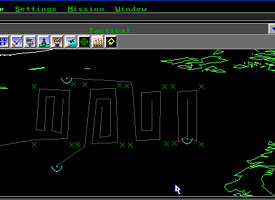
Figure 1 – Starting Positions
01:09Z
USS Flying Fish
For the last few hours the Fish has been trying to localize a faint submerged contact hovering to the west of the Barents Sea boomer bastion. The signal is faint and comes and goes.
All thought of gathering intelligence on the contact vanish in seconds with the arrival of the new orders. The Fish reverses course and heads towards the bastion and this time not just to listen but to hunt. The captain orders the SUBROCs removed from the forward tubes and in their place Mk.48 torpedoes are loaded. Launching noisy SUBROCs definitely won’t do for this mission.
Breaking contact with the sub the Fish almost immediately picks up surface contacts right on the heading the captain wants to take into the Bastion. We alter course north a little to try and bypass the contact. Probably a fence guard placed there specifically to stop the Fish getting into the bastion.
01:19Z
USS Baton Rouge
The Los Angeles class fast attack boats were built for this mission and the skipper on the Baton Rouge has a veteran crew. When he receives the order to go to a war footing he knows that his aggressive patrol tactics are going to pay handsomely. He is already inside the bastion, pottering along at three knots and making like a hole in the water.
Barely 15 minutes after the orders come in sonar reports a submerged contact west of the ship’s current position. We alter course to investigate. The tension in the crew is palpable now as the realization sinks in that this is no tracking party drill. A firing solution is obtained and this time there are warshots loaded in the tubes ready to fire.
01:20Z
USS Flying Fish
The submerged contact is back and this time it seems to be closing, possibly on an intercept path. This is starting to look uncomfortably like a set up: a line of picket ships guarding the fence and one or more subs chasing us towards them. The Fish goes as deep as the ocean here allows and slows to 5 knots to minimize noise signature. The captain orders a course of 007 degrees in the hope that the change of course and speed will confuse any pursuer that may have a bead on us.
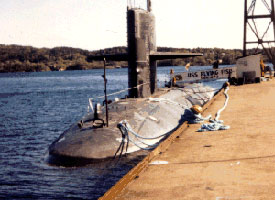
Figure 2 – SSN673 USS Flying Fish
02:10Z
USS City of Corpus Christi
The boat is actually pretty close to where intel says the bastion boundaries are but our assigned patrol area is well east of our current position. The captain decides to make a run to the east before turning northwards to enter the target zone. No sense in disturbing the neighbors until it’s necessary.
However, before too long sonar detects a surface group ahead. It’s time to run north since any further transit to the east merely invites detection outside the bastion and will simply delay getting into position to execute our assigned mission.
02:19Z
USS Flying Fish
More surface contacts! The sub contact appears to be closing as well. The captain orders a course change eastwards. There’s no real alternative but to try and sneak past the gate guards and try to lose the submarine tailing us that way.
02:37Z
USS City of Corpus Christi
As the boat approaches the boundary point, the sonar picture clears and the surface contacts that guard the entrance to the bastion resolve. Not one but two Kanin class boats clearly working together and listening out for subs. The two destroyers are line abreast astride our axis of approach. The skipper opts for slowing our rate of progress down to a mere three knots as the ship rigs for silent running.
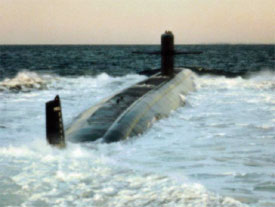
Figure 3 – SSN705 USS Corpus Christie
02:54Z
USS Flying Fish
As the ship closes on the northern end of the list of surface combatants, the individuals in the group come into focus. The first contact classified is a Grisha III; a small anti-submarine frigate. It’s not clear if there are four or perhaps five vessels in the surface group since contacts come and go at intervals but it’s obvious that the group is working cooperatively to sanitize the very area we must transit. It’s going to be a long night.
02:55Z
HMS Churchill
The Churchill makes a clearing turn as the bottom of the hour approaches. Not a moment too soon it appears for there in the baffles is a submerged contact. The contact alters course to pursue the intercept perhaps unaware of the fact that he’s been discovered. Since the ship is still outside the Russian SSBN operating area this trailer must be an attack boat. There’s little choice but to press on and hop that the Russian won’t follow the Churchill into the bastion itself.
“Torpedo, torpedo, torpedo!” the call causes a wave of fear to sweep through the control room. Sonar detects a splash at the surface and then the high speed screw of a torpedo searching for its intended target. The time for stealth has passed and the captain orders flank speed and deploys noisemakers. The torpedo contact is much closer than the sub that was tracking the Churchill. To make matters worse there’s a second splash and another torpedo starts its attack run.
The first torpedo detonates with thunderous concussion. Fortunately it seems the noisemakers caught its attention at the last minute and the explosion is a near miss rather than a direct impact. Still damage control parties to the rear of the ship have a few leaks to work on a small fire to put in one of the engine spaces. The second torpedo looks to be a dud since it never guides, plowing straight ahead and boring through the icy arctic waters until the batteries are depleted. Just as relief starts to grip the crew, sonar announces a third splash and another torpedo. This one though is further away and it is never a serious threat.
03:06Z
USS Baton Rouge
The patrol under wartime conditions is less than two hours old but already the Baton Rouge has found its first customer. A Delta II cruising unimaginatively due east at 10 knots above the layer. Better yet the geometry couldn’t have been more favorable the Russian is coming right to us.
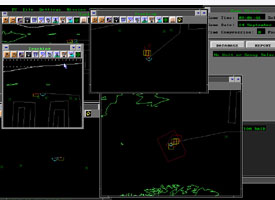
Figure 4 – Churchill evades while Baton Rouge hunts
The captain waits until optimum firing range and then shoots two fish in quick succession at the old Russian missile boat. The Baton Rouge dives and darts away to clear the firing area. Although no other contacts were detected prior to the attack, there’s a reasonable chance that other boomers or attack boats are in the vicinity. Even after launching the torpedoes however no other contacts present themselves. The torpedoes run straight and true and detonation follows. There are sounds of a submarine breaking up. Scratch one boomer.
03:18Z
HMS Churchill
Churchill’s tormentor is a Victor III, a capable attack boat and this one seems to have a persistent master for it keeps closing the range. Churchill has slowed to reduce self-noise: after the near miss it seems that the ship is noisier than her designers intended her to be. Since the ship is already compromised and her pursuer doesn’t seem inclined to give up it seems we will have to engage.
04:19Z The game of cat and mouse will play out in the next few minutes. The Victor maneuvers for a shot and fires another torpedo at the Churchill. The sonar crew makes it out to be a USET-80 given the noise profile and the fact that it is a Victor shooting as us.
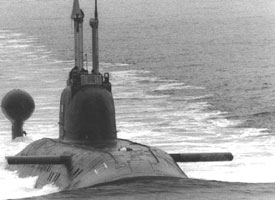
Figure 5 – Victor III Attack sub
We return fire with a pair of Tigerfish and both subs begin the abrupt defensive maneuvers. The Russian skipper makes a run to the north as part of his evasion and the Churchill goes in the opposite direction which takes us into the bastion patrol area. The Russian torpedo never acquires but on the other hand we hear no explosions from the Tigerfish either so it looks like both boats live to fight on a while yet. Contact is lost in the course of the evasive maneuvers and given the rate of separation there’s a pretty good chance that they won’t be able to track us again without making a great deal of noise to catch up to our position.
07:25Z
USS Flying Fish
Running at three knots and as silent as the crew can make her, the Fish approaches the net cast by the Grisha frigates. In the course of the transit both Grisha II and Grisha III boats are classified in the surface group. These hounds at the surface must have a scent of their quarry since the search pattern they are running continues to bracket the Fish but so far a scent must be all they have since no attack is detected.
09:22Z
HMS Churchill
With the ship now well inside the boomer patrol area, the ship’s sonar picks up a submerged contact to our east. It seems to be a single contact but given the extra self-noise the ship is likely making after the near-miss the captain orders a cautious approach. The contact is intermittent and the crew works the boat patiently maneuvering and popping up above the layer in an effort to get a fix on the contact.
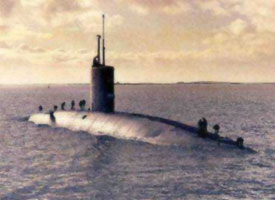
Figure 6 – The ill-fated HMS Churchill in better times
10:31Z Even with a slow approach it seems the Russian skipper must have heard the Churchill creeping up on him because he shoots a torpedo in our direction. We don’t have a plot running but the appearance of the torpedo is enough to signal where the bogie is. The captain orders a two torpedo spread down the bearing line. The two Tigerfish streak away into the chilly waters searching for the inbound torpedo and the ship that launched it.
This time the Russian torpedo is not fired blind nor is it decoyed and the warhead strikes the Churchill amidships just in front of the sail. This shot is no near miss and it breaks the submarine’s back. Churchill’s demise is mercifully quick for none of the crew escape.
The Churchill’s bad luck continues even after her own death as the two torpedoes she fired never manage to acquire their adversary.
19:14Z
USS Flying Fish
There are torpedoes in the water as the Russians either catch sight of the Fish or lose patience in merely attempting to tracking her passively. The skipper decides it’s more likely to be the latter and chooses to stay slow and quiet rather than make a high speed evasive run through the Grisha’s net.
In the course of the next half hour five torpedoes in total are dropped into the water around the Fish but the quiet strategy appears to pay off as none finds the intended target. The attacks stop as suddenly as they begin and the crew heaves a collective sigh of relief however the Fish is far from out of the woods.

Figure 7 – Flying Fish eases away from the screeners
23:00Z Throughout the rest of the night and early morning the game of cat and mouse continues. The Fish makes steady progress first on a north easterly heading and then coming more easterly to head more directly for the perimeter of the patrol area as dawn breaks. Now the Grishas are trailing but they continue to have enough of the scent to let them know roughly where their quarry lies and they follow continuing the search pattern.
September 15th 1985
11:30Z
The Grishas are still probing the waters searching for the Flying Fish but by mid morning the SSN enters the bastion patrol area.
At around this time and unknown to any of the NATO submarines searching for the Russian missile boats, two 533mm SET-65M torpedoes are fired, presumably by Russian submarines. The first of these turned out to have a defective warhead and a result did little more than scare the crew of the Yankee class missile boat that it clanged into at the end of its run. The other SET-65 however struck home exactly as its designers intended dispatching a Delta II boat to the bottom of the Barents sea. NATO forces remained entirely unaware of this loss until after the cessation of hostilities some weeks later.
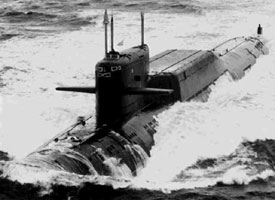
Figure 8 – Delta II missile sub
13:59Z
USS Corpus Christi
In the early afternoon hours of the second day the Corpus Christi picked up a whiff of a contact. For the four hours that followed, the crew patiently tried to improve the contact to the point of a firing solution. Frustration was definitely the order of the day as the contact continued to fade in and out like a mirage, never quite substantial enough to press an attack home.
18:34Z
USS Flying Fish
Having finally escaped the pursuit of the Grisha group at the western edge of the bastion patrol area, the hunting began in earnest in mid afternoon. As luck would have it the Fish latches on to not one but two submarine contacts in the early evening. This situation calls for extreme caution since the Russians are known to accompany SSBNs with SSNs as shadows and protectors. One is quickly classified as a Delta III making it the prime target for the engagement. 10 minutes later the second is identified as a Delta II. A pair of boomers in close quarters is much less dangerous than a boomer guarded by an attack boat but the Deltas are still no push over so the captain plans a cautious approach from the flank to mask the second submarine.

Figure 9 – Now you hear them, now you don’t
Good news and bad news. The Russians continue to have problems de-conflicting their forces as a Delta I is hit and sunk by a SET-65 torpedo during this part of the day. However, the two missile boats the Flying Fish was tracking disappear just as suddenly as they had appeared within two hours of the first contact.
September 17th 1985
03:31Z
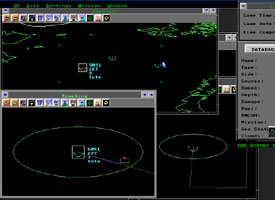
Figure 10 – The tables are turned
A whole day passes with no NATO boats coming into contact with Russian subs. The crew’s patience does eventually pay off however. In the early hours of the following morning, the Fish latches on to a Delta I and this time the contact remains steady throughout the approach to a firing solution. Two Mk.48 torpedoes are fired at the SSBN. The first is decoyed but the second strikes home. The crew is jubilant at delivering some payback for the long hours of torment as the Grisha boats harassed the Fish. Scratch one boomer.
USS Baton Rouge
06:38Z
The luck improves on the Baton Rouge later that morning also. She finds a Delta II cruising along noisily at 10 knots. The Delta is coming right towards the SSN making the intercept child’s play. As optimum firing range is reached, two torpedoes are launched at the Russian. The first one guides and strikes home with lethal results making the second torpedo quite unnecessary.

Figure 11 – The deadly MK-48 Torpedo
September 18th 1985
09:24Z
After clearing the area of the last attack and reloading the tubes with torpedoes from the magazine, the Baton Rouge finds another contact just over 24 hours later. This one too is obligingly predictable in it’s track and within a half hour the contact is classified as a Delta III, the juiciest target on offer in the bastion.
45 minutes later the captain has maneuvered the Baton Rouge into a favorable firing position. Once again two torpedoes are loosed to chase down the Russian missile boat. Both impact the target in quick succession and the Delta breaks apart and sinks in short order.
Aftermath:
Losing a nuclear attack submarine is never anything other than a devastating loss however, the mission to disrupt any Russian plans to use their boomers for an offensive launch was judged to be of vital importance. At conclusion of the war it seems that no plan for a pre-emptive strike using the Barents Sea fleet was ever contemplated by the Russian high command. However, the sinking of six Delta class SSBNs represented the loss of approximately one quarter of the entire Delta class inventory. Coming in the first few days of the war, this certainly had the desired side effect as Russian fleet commanders re-tasked naval reserves to sanitize the bastions; forces that might otherwise have been applied to offensive operations in the Norwegian Sea. History will therefore record the mission to bust the bastions as a success, despite the loss of the Valiant class SSN HMS Churchill with all hands.
Next Episode: Barents Sea, Part 2 – The Boomer Bastion Raid
Scenario end time 19850918T11:27:17Z
| NATO losses: | Soviet losses: |
| 1 – Churchill
Expenditures: 10 – Mk48 mod 4 |
3 – Delta II 2 – Delta I 1 – Delta IIIExpenditures: 2 – Stallion |
We want your Feedback. Please let us know what you thought of this article here.