
Interview by John “Spoons” Sponauer

Some of the newer readers at SimHQ.com may not know about the wide range of experience of our volunteer staff. Within our small group, you can find pilots with thousands of hours of flight time and practical military experience on any number of topics. One of our writers isAndy Bush, who hosts our Tiger Talk Air Combat Tactics Message Board and who has written about two dozen articles about air combat tactics for our Air Combat Corner. To kick off our Week of the Hog, we decided to start with a talk from one of our own, and his experience flying the jet in the time and environment it was originally designed for…the Fulda Gap, mid-1980s.
You flew in the Vietnam War, conducting ground attack missions in ‘fast-mover,’ the F-4 Phantom II. The A-10 was at least in part designed out of lessons learned in that conflict….the high degree of control duplication, a long loiter time, etc. From your experience, what did the A-10 bring to the table that you wish you had over Southeast Asia?
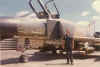
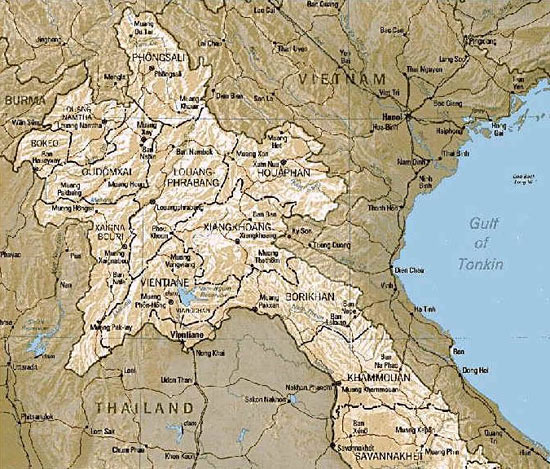
First, a word or two about the kind of missions I flew in the war. I was in the 497th Tac Fighter Squadron based at Ubon AB in Thailand from March 1973 to March 1974. Ubon missions at that time were primarily A2G…night AC-130 escort/CAS and day CAS. Almost all missions were flown in Cambodia.
I flew about half-and-half night and day missions in both the F-4D and F-4E. At night, we would join up with an AC-130 gunship and escort it into the target area. If AAA came up, we would dive bomb the AAA using Mk-82 LD and CBU weapons. If no AAA was present, the AC-130 could direct us to attack enemy ground positions that it would mark for us using the gunship’s cannon fire. The night mission was planned as a two ship, but we normally split up and escorted the gunship as singles…one guy would be with the gunship while the other was going to the tanker. We would then cycle back and forth from the gunship to the tanker.
Day missions were usually flown under the control of USAF FACs in OV-10s or Cambodian ground FACs. The targets were enemy ground forces and supply areas. The targets were both pre-planned as well as target of opportunity (pop-up targets). We were controlled by ABCCC (airborne command and control aircraft – C-130s) and were passed off to the FAC by the ABCCC. The standard day flight was a four ship.
Our tactics were medium altitude…we had a minimum altitude of 4500′ AGL to remain above the enemy small arms fire. The standard delivery was a 30 degree dive bomb pass with a release at about 6000-8000′ AGL. Because of the altitude restrictions, we did not do any low altitude strafing. The F-4 did not have any CCIP capability…we used the same dive bomb techniques that had been used in WW2 and Korea.
Our typical load was 6 Mk-82 or CBU bombs. The typical mission at night was 4-5 hours long with usually two trips to the tanker. Day missions were shorter since we usually had a specific target to go to and did not need repeated trips to the tanker.
If you think this does not sound like an A-10 type of mission, you are right. The A-10 was more of a replacement for the A-1 than the F-100 or F-4. The Hog is meant to be a slow mover and fly slow mover missions, not fast mover. There were both mission types in Vietnam and there are both still today. Today’s A-10 still flies the slow mover war…and the F-16 handles the fast mover business. The two are seldom interchangeable.
All of this is a way of saying that the A-10 and what I did in Vietnam are not to be compared…an apples and oranges type of thing. Instead, the A-10 should be compared to the A-1. In that regard, what the A-10 offers is better response time (it’s faster), better survivability (faster, more maneuverable, and better armored), and more modern weapons (standoff such as Maverick).

What did the Vietnam War teach you about CAS and the missions that you’d later be flying in the A-10?
Not much directly…instead, I would refer to my F-4 assignment in Europe in the mid-70s. There, I was based in Holland. While the unit mission was primarily A2A, we did have an A2G backup requirement…mostly CAS in northern and central Germany.
In these CAS missions, we usually worked with ground FACs or NATO air FACs in helos. The targets were ground vehicles simulating Warsaw Pact armor. The typical mission brief was an assigned initial point (IP) and a heading and distance to the target. We would leave the IP and run in to the target at 450-500 KIAS. As we approached the target, we would ‘pop-up’ and attempt to set up a low angle bomb pass. To be honest, I have to say that our proficiency in this was terrible. Usually, we never even saw a target…or if we did see it, it was too late to attack it…we just flew past it. What was the problem? The targets were too hard to see. Usually the target was just one or two army trucks or APCs that were not moving. No movement to notice, no smoke, no road dust…no nothing. The vehicles were dark colored objects on a dark background…we did not know exactly where they were, and we were moving fast. It was very, very easy to miss them. That was the number one lesson learned…CAS is a tough mission and what makes it tough is target acquisition and identification early enough to allow a successful attack without overflying the target.
What did we need to better fly the attack? That’s where the A-10 comes into the picture. First of all, the A-10 pilots are specifically trained for the mission…CAS is the primary mission, not a back-up as it was for us in the F-4. Then, the A-10 pilots routinely fly over the expected battle area…and become familiar with the terrain. Next, the Hog pilots are much better trained in low altitude navigation, have three radios for communication (UHF, VHF, and FM) instead of the F-4’s one UHF, and have much better maps.
Finally, the A-10 is equipped with weapons better suited for CAS and enemy AAA. Most important is the standoff capability of the Maverick and long range strafe. In the F-4, we had to drop bombs on the target…that meant overflying the target and risking getting shot. In the Hog, we did not want to overfly the target and seldom had to.
Last but also very important is the issue of speed. High speed and effective CAS are mutually exclusive in many cases, particularly in a European environment (the desert is different). A fast mover simply covers the ground at a rate that does not allow the pilot to search for a target whose position is not precisely known. 500 KIAS is about 850 feet per second. At that speed, the pilot has little room for error. Add to that the size of a typical tank (10’x20′). Now back off to the typical distance that the fast mover pilot has to begin his pop-up…the result is a target at that range (~3 nm) that is about as big as the dot in his pipper. Throw in a little camouflage and trees…you get the idea.
What lessons did my F-4 European CAS teach me? Only one. The best way to kill a tank was with another tank…or a helo. Fast movers were not the way to go.

Tell us about your timeframe in flying the A-10, and what roles you played in your unit(s).
I flew the A-10 from April 1982 to July 1988. I went through A-10 upgrade training in Tucson, Arizona for two months and then went to Europe. The A-10 unit in Europe at that time was the 81st Tac Fighter Wing at RAF Bentwaters, England. The unit had four detachments in Germany (three Luftwaffe bases, one USAF base) and always had aircraft deployed to these detachments. Our base in England was really the main headquarters and maintenance location. We all lived in England and flew training missions there, but the main mission was at the ‘det.’
There were six A-10 squadrons in the 81st, and it was typical for each squadron to have one third of its aircraft and pilots in Germany at any given time. Because of this routine operation in Germany, all pilots were vary familiar with the area around their ‘dets.’

My first year was spent as an assistant operations officer in one of the squadrons. In that time, I got my combat ready qualification and checked out as a flight lead and instructor.
In an earlier assignment, I had gone through the USAF Fighter Weapons School. This qualified me to serve as a unit weapons officer, and after a year in the squadron, I was assigned to Wing headquarters as the Chief of the Wing Weapons and Tactics Division. As such, I had six weapons officers working for me. We were responsible for developing training and tactics for the wing.
I spent one year in this job. During this time, our main accomplishments were to redesign the anti-tank tactics that had been previously used and to originate and implement a formal A2A training program. I wrote that program myself, and eventually it was adopted by Headquarters USAF for all European USAF A2G units.
Next, I moved to another job at Wing headquarters. This time I took over as Chief of the Wing Standardization and Evaluation Division (Stan/Eval). Myself and seven other pilots were responsible for administering and evaluating the unit’s training and combat capability. We gave all the pilots their annual flying ‘checkrides’ and conducted ground evaluations of squadron training and flight operations. We had an excellent office and were fortunate to be awarded “Best in NATO” during a yearly inspection by NATO headquarters.
My last year was spent as a Squadron Operations Officer. I had two primary tasks. My squadron was going to be the first European A-10 squadron to attend the Red Flag war games in Nevada. Following that, we had been selected to represent the 81st Wing in the semi-annual NATO war evaluation.
We had a great time at Red Flag…and were a bit of a surprise to the other stateside units that were unaware of our tactics and procedures. When it came time for our NATO evaluation, I devised a new command and control operation for the exercise. We practiced using it for several months, and when the time came to try it out, it worked well. The entire squadron deployed to Sembach AFB in Germany where, over a period of five days, we demonstrated our ability to fly CAS and strike missions under a simulated nuclear and chemical/bacteriological environment. We operated out of a sealed bunker and the pilots flew in complete chemical warfare gear. Our new command and control system easily handled the tough NATO mission tasking load…in fact, we actually requested additional missions and overflew our NATO mission requirement by 15%. We were quite proud and satisfied when the combined USAF and NATO inspection team gave us an overall ‘Excellent’ rating, and the control procedure became standard for the rest of the squadrons.
This assignment was the best of my career, and I credit the outstanding senior officer supervision and line pilot professionalism for making that so.

I returned to the US in June 1986 and was assigned as the Active Duty Advisor to the USAF Reserve A-10 unit at New Orleans. There, I helped the unit prepare for its war evaluation. It did very well and I was very proud of its performance. After two years, I retired from the USAF and became an airline pilot. Today, I am a Captain and FAA Check Airman on the DC-9.
Aircraft seem to develop a type of personality or mystique. Some planes are reportedly tough to fly; others seem to fit like a glove. Describe what it’s like flying the Hog. How does it compare to the other aircraft you flew in the USAF or since?
Like many aircraft, the A-10 is easy to fly…but hard to fly well. What does that mean? In simple terms, it means the A-10 is a forgiving aircraft that is stable and predictable throughout its flight envelope. Taking off, flying around, and landing are not difficult. But that’s where the easy part stops.
The CAS/strike mission is very tough. Enemy defenses are lethal. Targets are hard to find and hard to kill. This makes employing the A-10 a challenge. The pilot has to be able to fly low and as fast as the jet will go. His navigation skills have to be better than pilots flying other fighter types. He has to be willing to close with the enemy and go ‘eyeball to eyeball’ with him. The primary weapon is still the gun…and the gun is a close in’ weapon. If the Hog pilot is to get his weapons on target, he has to do the work himself…up close and personal. No computer bombing from the stratosphere! Mission accomplishment in a Hog is a very personal thing…and for that reason, very rewarding.

How does the A-10 compare to the F-4 or the F-104? Obviously, the missions are very different…as are the aircraft characteristics. I liked them all equally. Each did its own thing, and each had its good and bad points. I do admit, however, that warting around Europe at low altitude in the Hog was mighty fine!
If you were given unlimited power and could have added any one feature or capability to the A-10 while you were flying it, what would it have been and why?
Afterburners…LOL!!
Seriously, the jet is underpowered. An improvement in that area would have been nice. Since I left the A-10, the jet has been much improved with a new computer weapons delivery system. All that we did manually, the A-10 pilot now has computer aided help with. Long range strafe is no longer a huge estimate…the Hog cannon is deadly out to 2 nm and more. The A-10 now has A2A AIM-9 missiles…we only dreamed of such a thing. I would have given a paycheck to have trolled around Germany with a Lima on board…there would have been nowhere safe for the EgoJets and Lawndarts to hide!
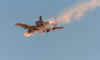
Speaking of that topic, can you talk about how the A-10 pilots were trained to deal with air threats? Was there a tactic to be used against, say, enemy attack helicopters you ran into across the FEBA, or other fixed-wing aircraft? How capable is the A-10 of defending itself? What are the advantages and disadvantages of it when dealing with an air threat? Did you ever see this for yourself in training or exercises?
When I got to England in 1982, I was pretty much appalled by the mentality of A2A training in the A-10 community. It sucked, to put it mildly. The emphasis was completely defensive, and maneuvers that were taught were, at least in my opinion, ineffective and amateurish.
How did this situation come about? Two things drove this…one was the stigma that the A-10 community operated under in those early years. The AF didn’t want the airplane. Having had the Hog pushed down its throat, senior leadership looked very unfavorably on any A2A aspect of A-10 operations. In their view, the airplane was just a bomb hauler and clearly had no A2A capability.
Second, the folks that made up the initial A-10 group of pilots were people with attack backgrounds…mostly F-100 and A-7. They were not an A2A bunch and were not inclined to think along those lines. Just as importantly, they clearly understood the political wisdom of not pushing A2A concepts on to a senior leadership that was spring-loaded to the NO position from the gitgo.
So…what was the A-10 A2A program when I got into the program? Simple answer. When attacked, use the Hog’s tight turn to force an overshoot. The standard defensive maneuver was a simultaneous turn of 180 degrees starting from a line formation position. The idea was that the 180 turn would force the bandit to overshoot. Having completed the turn, the Hogs would then return to their route. There was little to no talk about counter-offensive maneuvering…no training to practice this and no rules or procedures to make it happen.
The idea was that the bandit would go away having overshot the A-10 defensive turn.
Does that sound loony to you? It did to me, and when I was assigned as the Chief of the 81st Weapons and Tactics Division, I started a campaign to change things. Lucky for me, we were in Europe away from the meddling stateside senior leadership. Europe had always been on the “front lines” and I was very fortunate in having bosses that listened to my arguments for a detailed A2A training program that stressed counter-offensive maneuvering to kill the bandit.
I brought ideas from my Weapons School years as well as my time in the F-4. Eventually I wrote a regulation that laid down training and operational procedures, Rules Of Engagement (ROE), and maneuvers and tactics that replaced the old defensive program. The end result was that a typical training mission would include both A2G and A2A segments. There was no more defensive attitude…our emphasis was to use Double Attack concepts to turn and shoot the bad guy in the lips if he was stupid enough to try to get into our chili. Once the bandits had been dealt with, we would then return to our A2G mission.
This program was successful…so much so that USAF headquarters in Europe adopted it as the standard for all USAF A2G units stationed in Europe. Today, the program is still very much alive and has been adopted into worldwide A-10 use. The advent of the AIM-9 has only made the program more effective…the last thing a MiG driver wants to do is to get into the weeds with heater armed Hogs.
It seems that the A-10 and the CAS mission was sort of foisted on the USAF without a lot of respect for the aircraft or job, or maybe it was that the Air Force didn’t want the Army getting into the business. Did you see this at any level in your USAF career?
This is a very political hot potato. Most of you are probably familiar with how the USAF was not big on the A-10 in the beginning. In the 70s, the USAF wanted an A2A machine that would be the best in the world. The miserable A2A experience in Vietnam against the MiG-17s and 21s demanded a fighter that would be able to out maneuver a Soviet opponent. The USAF did not want to spend its limited budget on an A2G machine, particularly one as ugly as the Hog! The decision makers at the Pentagon did not like the A-10, did not want the mission, and gave the jet last priority. The Army was campaigning for the CAS role and wanted fighters to do the job. The USAF said “No way, Jose” and grudgingly accepted the A-10. If this sounds somewhat petty…it was.
All of this did not really make its way down to my level. I’ve only wanted to be a pilot…not a muckety-muck. I was happy to let others fight those battles.
How would you describe the A-10 community….is a fighter pilot pretty much a fighter pilot, or did A-10 pilots think of themselves differently?
For the most part, fighter pilots are pretty much alike, regardless of the equipment they fly. Some talk about ‘attack’ pilots versus ‘fighter’ pilots…I think that’s mostly baloney too. I’ve done both and don’t really see any difference.
But there is a certain difference between ‘fighter’ pilots and everybody else. First, let me say this. I think being a ‘fighter pilot’ is a state of mind more than anything else. There are many fine pilots that would love to be in fighters that can’t get there because of AF assignment policies. Most of them would make outstanding fighter pilots.
But there are some pilots that are better suited to flying other types of aircraft. Why? For one thing, they simply don’t have the stick and rudder skills. Next, and just as important, they don’t have the drive to go it alone…they are team players that do better in a crew environment such as in a tanker or transport. I’m not being critical of them…but facts are facts…some people are just not cut out to fly fighters.
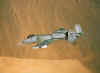
Describe the type of mission that you were preparing for in the A-10. Sort of walk us through what a CAS mission in Central Europe in the mid-1980s would have been like.
First, let’s set the stage as it was back in the early 80s. West Germany was bordered on the east by East Germany, Czechoslovakia, and Hungary, with massive Soviet forces stationed in those countries. These ‘bad guys’ were part of the Warsaw Pact (WP), a Soviet clone of NATO. Should hostilities ever break out in central Europe, the expectation was of a huge WP armored thrust across the border. These WP forces were expected to easily outnumber the opposing defensive NATO forces.
The NATO plan was to stall the WP advance until reinforcements from the US could be flown in. The objective was to put up a fight on the border and trade terrain for time. In that game plan, the A-10s were supposed to help slow down the oncoming WP armored formations.
Just how did we plan to do that? The tactics used by the 81st Wing had been developed in the late 1970s. The basic idea was to pre-plan specific geographical areas all along the border separating East and West Germany. These areas varied in size…imagine an area roughly 5 nm by 10 nm. These areas were assigned to specific squadrons; as a result, the pilots of those squadrons could train in these areas and become familiar with the terrain.
The concept was that the good guys (US and NATO ground forces) would retreat west to the western edge of the A-10 assigned area. Once all of the friendly forces had cleared the area, that area would be declared hostile. It became a “kill box”…any military object in it would, by definition, be a target for the Hogs.
In these areas, the main roads were the primary focus, since it was these that the WP tanks would want to use to drive west. Our game plan was to look for choke points such as bridges and road intersections…if we could stall the WP forces at a choke point, then we would be doing our job. Therefore, our mission was not necessarily to defeat the oncoming WP forces…instead, it was to slow them down.
Just how did this work? Pretty well, for the most part. Each A-10 squadron trained to operate autonomously in the event that communications were degraded with higher headquarters. The squadron would fight in the “kill boxes” until the WP forces broke out…then the squadron would fall back west a few miles and repeat the process.
This was the situation up to about 1984. Then a new line of thinking was put forward based upon the idea that the WP had developed the capability to “leapfrog” the border using airborne ground and armored forces. The thought was that it did no good to fight on the border if the bad guys just overflew you and dropped troops and tanks into your backyard. This threat was very real…the WP forces had been observed practicing it in many large exercises. The question became one of how does NATO deal with this new attack.
The answer was the A-10. Why the A-10? For two reasons. First, the A-10 mission had always been to train for unpredictable situations. We had flown the entire length of Germany for a number of years and were familiar with the terrain. We had also worked with the NATO ground forces in those areas on a daily basis…we were competent to communicate and integrate our flights with their operations. Other NATO fighter forces were not as capable in this type of warfare.
Second, the A-10 had the loiter time and mission flexibility to be able to move about West German airspace in response to “pop-up” targets. We had implemented a plan for airborne holding points where flights of Hogs would orbit while waiting for mission tasking. This airborne force could quickly respond to unforeseen tasking. As soon as a WP airborne assault was identified, the A-10s would flood that area and turn it into a shooting match. This is the new strategy that my squadron demonstrated in our NATO evaluation in the spring of 1986…we were the test case of a new command and control system that would enable the squadrons to attack WP air assaults in a timely manner. Our successful evaluation changed the emphasis from static defense on the border (the “kill boxes”) to a more fluid and responsive defense in the West German interior.
All of this was flown at the lowest of altitudes using standoff weapons….Maverick and the gun. We did not carry “bombs” in the general sense. The only freefall weapons in our weapons storage were CBU weapons…we had no “iron bombs.” We did not want to overfly the bad guys…we wanted to shoot them from a safe distance, and then mop up later with the gun.
How did this A-10 system work? The Hog squadron communicated directly with NATO ground forces headquarters. Each squadron was run by a “Mission Director,” usually the Operations Officer. His task was to keep track of his pilots and come up with a plan to have flights ready to send when the call came. The trick was to rotate the flights throughout the day, keeping them armed and fueled. To gain additional response time, airborne holding points were used.
The A-10 Mission Director (MD) would get a teletype message from NATO Hq asking for support at a given place and time…this usually came in multiple requests. The MD had to analyze these requests and decide which he could meet and which he could not. Then, he would radio the assignments to his pilots who were either on the ground in their cockpits or airborne in the holding patterns. The result was a race against time as the MD juggled A-10 flights and tasking to keep up with the requests coming in from the NATO ground forces.

It was a challenging job. I was the MD for our evaluation and it was pure joy to watch our pilots bring home the bacon day after day despite the most demanding constraints put on us by the NATO evaluators. They even “killed” me on the fourth day to see if that would slow us down, but my assistant jumped right in and kept hammering away at the tasking. The next day, they “brought me back to life” for the end of the exercise…by that time, we were pretty cocky! We knew we were way ahead and we kept asking for more and more missions just to prove the point that we could hack anything. The evaluators had these big grins on their faces at the end of that last day…so when all was said and done, we retired to the Officers Club for a well deserved celebration!
You left the service in the years just prior to Operation Desert Storm. Could you ever foresee the wide range of roles that the A-10 played in that war, performing everything from CSAR to Scud-Hunting? What do you think that says about the aircraft, its capability, and the aircrew?
I must admit, I did not. My last job was as the Active Duty Advisor to an AF Reserve unit. I had to get that unit ready for its wartime evaluation (just like the one I had just done in Germany). In fact, this Reserve squadron was tasked to go to the same base that I flew out of in Europe in the event of war. In getting this unit ready for its evaluation, I never considered anything other than a German low altitude, high threat scenario.
I retired in 1988. Two years later, Iraq invaded Kuwait…and my former reserve unit was called up to go to Desert Storm. The war that they flew was completely different from anything that I had imagined. In my time in the Hog, we never foresaw operating at medium altitudes in a bandit-free environment. We never imagined that we would have to do this at night…we were strictly day, low altitude, high threat animals!
But, Hog drivers are a flexible bunch, and they did a truly superior job at designing and implementing a whole range of new procedures and tactics, literally on the spot there in the battle zone. The Hog was the master of the CAS battlefield in Desert Storm. The last thing that went through many Iraqi minds was a 30mm DP round!
Tell us what you view as the aircraft’s greatest strength.
Flexibility and tremendous weapons carriage. Loiter time. Pilots trained to operate in lousy weather conditions at very low altitudes. These are things that fast movers can’t do very well.
Did you choose to fly A-10s or was there another aircraft or unit you would have preferred?
I admit I would have preferred a F-16 or F-15 when I went to Europe. I knew nothing about the A-10. But…once I started flying it, my mind was changed. Our flight ops in Europe in the ’80s were the best flying ever, anywhere. The 81st was a top notch outfit with top notch people. I was ever so lucky to be a part of it, and it will always be my favorite assignment.
Is the A-10 obsolete with the new generation of anti-aircraft being fielded today? Is there still a need for a slow but heavily armored and armed fixed wing CAS platform?
The one thing the A-10 has proven over the last 20 years is its ability to adapt to changing battlefield conditions. New tactics, new training, new weapons, and new avionics have all kept the A-10 a viable weapons system.
Second, the nature of the battlefield has changed from the 1980s German scenario to one of less intense, low intensity conflicts. In these new types of conflicts, the A-10 still has a role to play, as witnessed in Kosovo. The A-10 now performs the airborne FAC role as well as the anti-armor mission…the difference between now and the past is that the A-10 FAC can also attack the very targets he locates and marks.
In Vietnam, the best fighter for the Search and Rescue mission was the A-1. The A-10 now flies that mission and is even more capable than the A-1.
There will always be the argument of what is the best way to kill a tank. With regard to the A-10, I find that discussion to be moot. There is now and always will be a need for responsive and devastating airpower in support of ground troops. Until something better comes along, the A-10 will be there to meet that requirement.
How would you compare the Hog to probably its closest rival, the Su-25 Frogfoot?
I have to be honest and say that I’m no expert on the Su-25.
But, having said that, I’m going to go with the A-10. Why? Better gun, better avionics, better loiter, better weapons.

But the jet is not the real issue. Like a sword, the A-10 is just a tool. What turns it into a weapon is the pilot in it. And there, the USAF pilot is without qualification, the best. The Su-25 may be a fine weapon system in some respects, but, after everything is said and done, the only thing that counts is the person pulling the trigger. His training, his spirit, his “get the job done” attitude is what wins the day…and the Hog driver is tops!
Related posts:
 Close Air Support in the Vietnam War
 Page 2
Close Air Support in the Vietnam War
Close Air Support in the Vietnam War Page 2
 Fighter Ops’ Rick “Rjetster” Ladomade Page 4
 John and Andy’s Excellent Adventure
 Lock On: Modern Air Combat Page 4
 Marine Air Virtual Airline
 One Day In The War – Wolf 20, Part One Page 2
 Situational Awareness: Padlock in USAF and Flanker 2


