| Feature Article
Boom and Zoom Tactics, Part One
by Andy
Bush
Be sure to read all of the parts
of this series
[ Boom and Zoom,
Part One ][ Part
Two ][ Part Three
][ Part Four
]
Introduction
In the hot and humid morning air,
the Sidewinder snaked towards one of two MiG-17s. The pair
of F-4Es had run a perfect stern conversion intercept on the
bandit flight. Ground clutter prevented the AIM-7 shot
but
the lead F-4 pilot took that in stride
he wasnt
that keen on using the "Great White Hope," given
the lousy kill percentage that the missile had.
"Splash one," Lead called
as his heat seeker impacted the MiG-17. The MiG immediately
broke into a smear of flame. The second MiG continued straight
ahead for a second or two
almost as if the pilot had
been stunned into inaction. Then it broke hard left
away
from the F-4 flight as it happened
the MiG driver apparently
thought a defensive break was a better idea than continuing
to look for a threat that, until a second earlier, he had
no idea was anywhere near.
"Shit hot," thought the
F-4 lead as the MiG broke the wrong way. All this did was
make it easier for the lead to solve the angles. The Lead
turned hard into the MiG and pulled his nose out into lead.
He reached down to select his gun and verified his gunsight
in A2A mode. His plan was to arc the MiG to close the distance
and then yo-yo off into a gun track position.
Unfortunately, Lead had never seen
a MiG-17 turn with a terrified pilot pulling on the pole.
The MiG almost appeared to be swapping ends as it continued
its max performance level turn. Seeing his neat little game
plan going down the toilet, Lead shoved the throttles into
burner and pulled his nose further into lead. "Going
guns", he radioed his wingman who was lagging the turn
to the outside. Lead set his pipper in the plane of motion
of the MiG and eased the stick forward to get about the one
G firing conditions he was looking for.
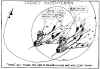
But as the MiG moved towards the HUD,
its rate of turn changed what would have been a 90-degree
deflection shot into a front quarter snap shot. This caught
Lead again by surprise. He pulled the trigger, but even as
the Gatling spun up, he knew he was too late. It was time
for the lead to get back into the drivers seat
so
far the MiG had managed to evade his attack.
The Lead had made his share of mistakes
for the day
he knew continuing to maneuver with the 17
was an exercise in futility. It was "back to the text
book" time, and out of it, Lead pulled the chapter on
energy fighting. He leveled his wings, selected full AB, and
pulled back on the stick to rotate right on the steady AOA
tone for best turn performance. As his nose reached the vertical,
he relaxed his G and pirouetted to keep the MiG in sight.
He eyeballed his slant range for the pulldown, and then made
a final roll adjustment to aim his lift vector well in front
of the still turning MiG. Then it was back on the stick again
to the tone and pull the nose down into the re-attack.
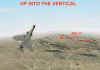
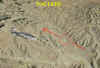
Well
well leave this story
for some other time while we look at the tactical decisions
that the F-4 pilot made. What was this chapter that he was
thinking of? What is an "energy fight"? That is
what this article is going to look at. Many of us use similar
concepts when we fly our favorite sim. In the flight sim community,
this tactic is known as the Boom and Zoom maneuver, or BnZ
for short.
Background
If you have read any of my articles
before, you know whats coming now!! Yep
its
time for a little academics! A successful BnZ attack is going
to come as the result of two things
knowing when to fly
the maneuver and knowing how to fly the maneuver. Lets
start off with a look at when such a maneuver would be necessary
in the first place.
We have this maneuver in our clue
bag mainly because we can put our A2A maneuvering into one
of two basic categories with respect to our adversary.
One category is when our fighter "turns
better but accelerates worse" than our adversary. In
this case, we refer to our fighter as an angles fighter. The
second category is when we "turn worse but accelerate
better" than our adversary
that makes us an energy
fighter when compared to him.
Turning
Performance
A word or two on this subject may be helpful. There are two
types of turn performance
turn rate and turn radius.
Turn rate means how fast it takes to turn a given number of
degrees
this value is expressed in number of degrees
per second. In our example above, the F-4 could sustain a
maximum turn rate of about 10-12 degrees second under ideal
conditions.
Turn radius is self-explanatory
if
a fighter were to fly a constant airspeed and constant G circle,
the radius of that circle would be his turn radius.
The key to your appreciation of turn
performance is understanding that turn rate and radius are
only a function of airspeed and G. The winning combination
is that of maximum G at minimum speed to produce the greatest
rate with the minimum radius.
One other factor worth mentioning
in this turning performance discussion is wing loading. Wing
loading in simple terms considers the lifting area of the
wing (in square feet) and relates that to the gross weight
of the aircraft
we end up with wing loading being measured
in pounds per square foot. The less weight that a wing has
to support allows it to generate G at a slower airspeed. A
good example can be found when comparing the P-40 to the Japanese
Zero. The weight difference here was over 2,000 pounds, the
P-40 being the heavier aircraft. The end result was that the
P-40 was unable to match the slow speed turning performance
of the Zero
if the P-40 tried to slow down to match the
turn radius of the Zero, it could no longer sustain the same
G as the Zero. Consequently, the Zero had a higher turn rate
and could, and did, get on the P-40s tail easily in
a turning contest.
The next diagram is a simplified illustration
of differences in turn rate and radius. The P-40 is unable
to match the slower Zeros smaller turn radius and higher
turn rate. In approximately two turns, the Zero is gaining
the advantage on the P-40.
Acceleration Performance
With regard to this factor, we
are talking both acceleration (ability to increase speed over
time
knots per second), as well as top speed (knots per
hour). In general, when we talk BnZ capability, we consider
top speed more important than acceleration.
Bottom Line
an angles fighter
is one that can generate a higher turn rate at a slower airspeed
than the aircraft it is being compared to
and an energy
fighter is one that can accelerate to a faster top speed than
its opponent. In our sim world, we often refer to the angles
fight as a "turn and burn" (TnB) and the energy
fight as the "boom and zoom" (BnZ).
Remember
the terms are relative
only when making comparisons. It is entirely possible for
a specific fighter type to be both, depending on its opponent.
For example, the P-38 would be an energy fighter when compared
to a Zero and an angles fighter when compared to a Me-110.
All right! As is commonly asked these
days, "Cant we move on?." And the answer is
"Most definitely!" Lets get away from the
academics and spend the rest of the time talking BnZ tips,
techniques, and considerations.
Performance Comparisons and the
BnZ Attack
One excellent way to examine
energy tactics is to study performance specifications for
a given sims aircraft. The online sim Aces High publishes
top speed and maximum rate of climb numbers for all of its
fighters. Other sims such as MiG Alley include energy comparison
diagrams in their manuals. Lastly, some sims benefit from
after-market strategy guides that include performance data
of
these, the MS CFS guide is a good example.
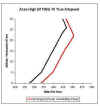
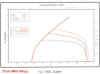
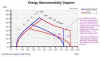
My good friend Leon Smith has let
me use the next figure to show how a Spitfire matches up against
a P-51. This figure clearly shows how the P-51 enjoys an airspeed
and energy advantage over the Spitfire. The two curves intersect
at about 250 mph. Below that airspeed the Spitfire has the
advantage
above it, the P-51 does. Comparison diagrams
such as this make it easy to identify the areas of best performance
for your particular aircraft.
An Overview Of Boom And Zoom Tactics
The Two Types of BnZ Maneuvers
To simplify this discussion,
Ill use BnZ as a general term to cover all maneuvers
of this type. Then, Ill break that down and say, that
for the purposes of this article, there are two types of BnZ
maneuvers
the "hit and run" (HnR) and the "hit
and climb&" (HnC).
In flying with some of you folks,
it seems to me that often you are flying a "hit and run"
technique thinking this was how the BnZ was flown. Now, there
is absolutely nothing wrong with that! As I have already said,
I consider the "hit and run" to be a type of BnZ.
I just want to make sure that you understand that this is
but one of two BnZ types.
Later in the article, Ill go
into more detail on the specifics of the HnR. For now, lets
just say that this type of maneuver is best used against an
opponent that has a significant maximum airspeed deficit relative
to you. What does this equate to in terms that we can use?
My rule of thumb would be that your WW2 fighter should have
at least a 100mph advantage in top speed (P-51 vs Zero), and
that your modern jet fighter should have a 200 knot advantage
over its opponent (F-4 vs MiG-17). Please note that I am intermixing
airspeed in mph and knots to match the indicating system in
those era aircraft.
Your other option in the energy fight
is what I am now calling the HnC. This is a maneuver flown
out of the plane of turn of the opponent. We usually think
of the opponent in more or less of a level turn, so the HnC
is usually thought of as a vertical maneuver that goes "up"
relative to the ground. An example of this tactic is Double
Attack. This concept was developed after the Korean War and
used the superior energy advantage of the F-104 against the
MiG series of fighters.
In either case, when you fly these
maneuvers you are looking for turning room to re-enter the
fight. You do this by extending away from the opponent. In
the HnR, you are trying to gain lateral separation as a result
of your airspeed advantage
in the HnC, you are looking
for vertical separation by trading airspeed for altitude.
The Reasons for the HnR and the
HnC
Why would we want to fly such
a tactic? I can think of three good reasons for starters.
The first, we have already touched on...the opponent can outmaneuver
us. A second reason may be that we are outnumbered but still
want to engage
rather than get tied up with odds not
in our favor, we decide to make slashing attacks. Lastly,
our armament type may be a factor
in China in 1942, the
Flying Tigers liked to go head on against their Japanese opponents
because of the P-40's superior hitting power.
In our sims, the aircraft that we
fly have specific performance parameters programmed in. We
often refer to these as the "flight model." If you
are going to be successful, you must be sure to familiarize
yourself with your chosen aircraft. In particular, know how
it stacks up against your likely opponents. And never forget
that you must do this for each and every sim you fly. Dont
assume that the P-38 that you fly in one sim will be the same
as in another
bad assumption! Equally bad is to assume
that a given opponent is the same from sim to sim. So choose
your sim and the plane you want to fly. Study your aircrafts
performance and the performance of the adversaries. Then decide
how to fly your aircraft.
Being outnumbered is a bummer! In
off-line single mission or campaign flying, we sometimes have
a good idea of what numerical odds we are facing. online
flying can be much different. Bandits show up all the time
and
often just when you dont want them to! online flying
is usually thought of as a "multi-bogey" environment
and for good reason. Many prefer BnZ tactics when online
as a means of guarding against being surprised
not a
bad idea at all!
Lastly, your armament can be a big
factor. Want to go head to head with guns? A P-38 is a great
choice due to its hard-hitting combination of 20mm cannon
and 50 cal MG. This particularly true if your sims AI
weighs armament type in computing the hit bubble Pk. As with
the first factor (relative performance), know how your sim
is programmed when choosing your attack options. Most BnZ
gun attacks involve deflection shooting, rather than a tracking
shot. Because of the low Pk of a deflection shot (as compared
to a traditional tracking shot), the heavier your armament,
the better chance you have of getting a kill. Cannon fire
(20 or 30mm) is much more effective than rifle caliber machine
gun fire, such as the .303 guns in the early Hurricane and
Spitfire.
One Historical View of Boom and
Zoom Tactics
One of the best (if not THE best)
examples of BnZ tactics, is the record of the American Volunteer
group (AVG) against the Japanese in the first six months after
Pearl Harbor. Better known as the Flying Tigers, the AVG unit
was commanded by a retired Army Air Corps pilot who had come
to China several years earlier to help the Chinese resist
the invasion of the Japanese. This officer, Claire Chennault,
studied Japanese aircraft and tactics and developed an unorthodox
theory as to how to best fight the Japanese fighters. For
a bio of Gen. Chennault, see http://danford.net/clc.htm.
It was this theory that Chennault
brought to the AVG, and he schooled his pilots thoroughly
in these concepts prior to their first combat. As we all remember,
the unit had an excellent record against their opponents.
From this, a number of conclusions and assumptions have been
made.
In preparing this article, I did a
little research into the AVG and found some very relevant
info that bears directly on how many of us think about BnZ
tactics. But I also found that some commonly held assumptions
regarding the AVG use of BnZ need a little clarification.
The AVG operated as a unit from December
1941 until the summer of 1942. Then, it was absorbed into
the regular Army Air Corps. So, the AVG flew early in the
war and only for a relatively short period of time. In that
six-month period, the AVG had an outstanding success record
against their Japanese opponents.
But, we need to look at exactly what
the AVG did when we start to make generalizations about how
to fly BnZ tactics.
First of all and contrary to what
many believe, the AVG did not fly against the Zero fighter.
The Zero was not operating in that part of China at that time.
The two types of fighters that the AVG encountered were the
Ki-27 "Nate" and the Ki-43 "Oscar".
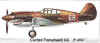
One side note of interest
the
P-40C pictured above depicts a RAF Tomahawk used in the North
Africa campaign. This was the first use of the "shark
mouth" nose art and was copied by the AVG from these
aircraft.
Chennault had not developed his theories
by observing Zeros. His experience was with the older, fixed
gear, Japanese fighters. These aircraft weighed about half
as much as the P-40, were very lightly armed, were extremely
maneuverable, and were quite a bit slower than the P-40. In
the Japanese Army and Navy pilot training schools of that
time, aerobatic dogfighting skills were emphasized over other
types of tactics. As a result, Japanese pilots were encouraged
and expected to dogfight in 1v1 TnB contests.
Chennault came to several conclusions.
First, dont try to dogfight the Japanese pilot
hes
probably more experienced in this type of maneuvering than
you. Second, dont try to dogfight with their fighters
they
are much too maneuverable and will easily out-turn the P-40.
Lastly, use the P-40's speed advantage to attack and break
off under your conditions, not theirs.
And so the AVG would make slashing
attacks and then dive away to reposition for another attack.
We all know that. What is not so well understood is why the
AVG could be successful at this. That directly relates to
how you fly your fighter in your sim. If you adopt the AVG
technique without knowing the "whys," you may be
setting yourself up for disaster!
Here it is in a nutshell. The P-40
had a speed advantage of at least 150mph in a dive over the
Nate and Oscar. With that kind of airspeed difference, it
was possible for the P-40 pilot to dive away from the Japanese
fighters. The Japanese fighters might turn to follow, but
they would never catch the P-40. The P-40 pilot would be able
to get far enough away that he could turn back, get his speed
back, and re-attack to repeat the process all over again.
This HnR tactic worked well because
of the limitations of the opponent. It is unwise to assume
that the AVG experience is a rubber stamp approval for all
A2A engagements. The main thing to keep in mind is the top
speed of your opponent. If he can equal your top speed, then
a HnR game plan may be unwise. Why? Because your opponent
will be able to deny you the spacing that you need to turn
around. Dont try this against a FW-190 or a MiG-21
you
may get a nasty surprise.
Lastly
how well did the AVG do
using BnZ tactics? The numbers speak for themselves. During
its seven months in combat, the unit was credited with at
least 230 kills. Most were fighters, and the majority of these
(approximately 80%) were Ki-27s. As for losses, the AVG lost
five pilots in A2A engagements and another nine to ground
fire during A2G missions. By anyones reckoning, that
is an outstanding record.
See http://danford.net/avg.htm
for more info about the Flying Tigers.
HnR And HnC Tactics And Tips
HnR
HnC
Which
One Do I Use?
There may be no absolute answer to this question, so Ill
suggest some generalizations.
First, what is your objective? Is
your sim mission A2A or are you flying an A2G mission enroute
to the target? Are you H2H in a 1v1 or are you in a multi-bogey
situation like we see in online sims such as Aces High or
in many campaign missions. The answer to these questions may
well help you decide which tactic to use. If your mission
objective is to avoid getting tied up in a TnB, then a HnR
strategy may be best for you.
Next, look at your fighter and its
performance capabilities. How does it stack up against the
opposition? Remember that this is a relative situation. You
may be a HnC fighter in your F-4 against a MiG-23 and a HnR
when engaging the MiG-17.
Lastly, how good are you at using
the views in your sim? Does your sim have a padlock? HnC maneuvering
is much easier when using a padlock
snap views are easy
to use when flying the HnR.
The Entry
to the Attack
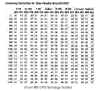
The next figure is taken from a well-known sim strategy guide.
It shows four types of entries. Fair enough. Your avenues
of attack cover a three-dimensional arena. All four types
of entries may "work" under certain conditions.
The diagram implies that most entries are head on. There is
no certainty that this will be the case. Most engagements
are too unpredictable to assume any entry type. Other than
attacks flown against straight and level bombers, your entries
will be against maneuvering fighters where the actual entry
angle will be hard to predict. Most common is the "high
slashing" attack made from any angle.
Some assumptions can be made regarding
these entries. Dont use the "vertical" attack
against a target at low altitude
you may not have enough
altitude to recover from your dive! The vertical attack results
in a high deflection gun shot
make sure you know how
to make this type of gun attack. The "vertical"
entry will have the lowest probability of kill (Pk).
The "level" and "low
slashing" will require a significant energy advantage
this
may work against bombers and less-capable fighters, but will
not be as effective against similar performance aircraft.
The Exit
from the Attack
Briefly, you have two options. You can dive away and go home,
or you may climb away. The former is the easiest to fly. When
you have an energy advantage, the latter is an option. For
example, the AVG P-40 could climb at a higher airspeed than
its opponents. More on exit strategies a little later on.
Defending
Against the HnR and HnC
Your defense can take many forms, depending on the initial
set up.
Never let an opponent keep an altitude
advantage
if you see him soon enough, go max power and
begin an energy conserving climb into him.
If bounced at low altitude, get as
low as possible to take away the opponents ability to
dive away.
If the opponent is diving on you,
try to turn into and below him. This will increase his dive
angle and complicate his gun-aiming problem. This also reduces
his lateral and vertical turning room
this reduction
in bandit maneuvering room is known as "jamming"
the bandit.
If the opponent gives you any turning
room, lead turn him at the merge.
If you pick up the opponent too late,
then turn into the attack using an energy conserving turn.
Try to get 180 degrees out if you can. Keep as much energy
as you can
you may need it for a gun jink!
If the opponent repositions high (HnC),
unload, turn under him to take away his lateral turning room,
and go for speed. This tactic is particularly effective if
you do not have the energy to climb up into the attack. For
example, A-10s use this tactic to defend against slashing
attacks at low altitude.
If the opponent dives away (HnR),
turn hard to follow. Lower your nose to about half of his
angle of descent. This will allow you to accelerate while
giving you the chance to close the distance (or reduce his
extension) through arcing. When you see him begin to climb,
follow him with an energy-conserving climb also. This will
reduce his ability to gain potential energy on you.
This concludes our introduction to
the basics of the BnZ type of attack. In Part Two of this
article, Ill cover specifics for each attack type. See
you then.
Click
here to go to top of this page.
Copyright 2009, SimHQ.com. All Rights Reserved. Contact the webmaster.
|